
<< đź‘€CLICK HERE to Unlock Exactly What To Do When Labor Starts!!! đź‘€ >>

How to Reduce Birth Anxiety: 3 Things First-Time Moms Can Do Before Labor Starts


Someone may have told you that the best way to prepare for birth is to stay positive, trust your body, and let nature take over.

That advice sounds comforting. It may even be partly true. Your body is doing something remarkable, and confidence matters. But “just trust your body” is not a complete birth-preparation plan.

It does not tell you what to do when contractions begin at 3:00 a.m. It does not tell you whom to call, when to leave for the hospital, what to grab, or how to calm yourself when your mind suddenly goes blank.

For many first-time moms, that blank space is exactly where birth anxiety grows.

You are not anxious because you are failing to think positively enough. You may be anxious because labor still feels unpredictable, unfamiliar, and full of unanswered questions.

The answer is not to memorize every possible labor scenario. The answer is to give your brain a few clear next steps.

A simple plan cannot control birth, but it can help you feel less lost inside it...

Continue Reading...

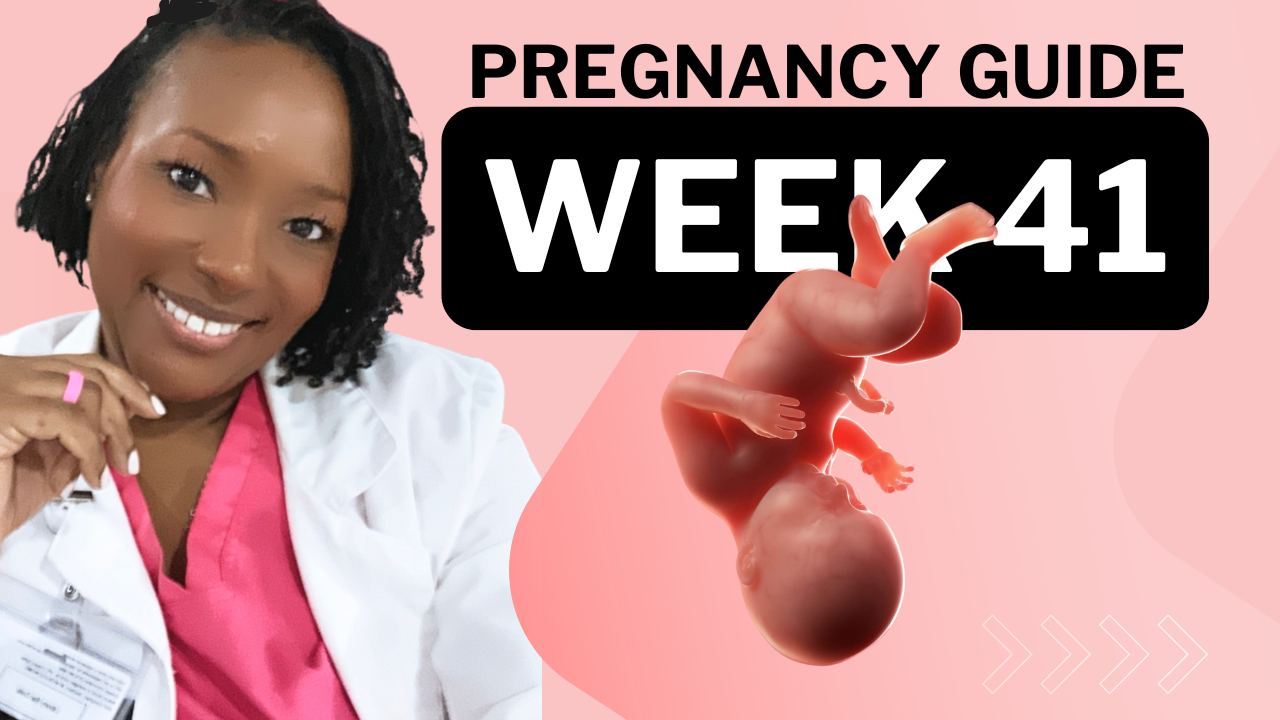
41 Weeks Pregnant? Here’s What No One Tells You (But You Need to Know!)


If you’re 41 weeks pregnant, you’ve probably heard every “Any baby yet?” text known to mankind. But here’s the truth: 41 weeks is still normal — and your body is not behind.

Most people don’t realize that full-term pregnancy ranges from 37 to 42 weeks. That’s a five-week window of normal! Only a tiny percentage of babies come on their exact due date.

So if you’re still pregnant… nothing is wrong. Your baby and your body may just need a little more time.


Why First-Time Moms Often Go Past 40 Weeks

Research shows that first-time moms are more likely to go beyond 40 weeks because:

  • The cervix takes longer to ripen

  • Hormones sync later

  • Baby’s brain and lungs are still maturing
    Your body hasn’t done this before — it’s learning.


What’s Actually Happening Inside Your Body at 41 Weeks

Even if you don’t feel “close,” your body is preparing for labor in powerful ways:

  • Your cervix may be softening

  • Oxytocin receptors are multiplying

  • Baby is addi

    ...
Continue Reading...

The Contraction No One Talks About…

Today’s entry is a good one, because we’re talking about a moment almost every pregnant woman hits — but nobody warns you about:

The first practice contraction that actually makes you stop mid-sentence.

You know the ones I’m talking about…
You’re walking, folding laundry, minding your business — and suddenly your whole belly tightens like a fist.

Not painful.
Not dramatic.
Just… tight.

So here’s the real talk:
That’s a Braxton Hicks contraction — your body’s rehearsal for the big day.

But what most moms don’t know is this:

Braxton Hicks are actually one of your body’s best clues that your uterus is getting stronger.

They’re literally your uterus doing tiny workouts.
Like those baby Peloton classes you didn’t sign up for but apparently still have to attend.

Here’s what they actually mean:

1. Your uterus is building endurance.

Just like your legs would train for a marathon, your uterus is prepping for the marathon of labor.

2. They often show up when you’re tired...

Continue Reading...

Why Kegels Might Be Hurting Your Birth — And What To Do Instead


If someone’s told you to “do your Kegels” when you’re pregnant, don’t hit play on that autopilot just yet. Because when it comes to prepping for birth, the story isn’t quite what we’ve all been told.


What’s wrong with “just Kegels”?

“Kegels” are those squeeze-and-lift exercises you do when you’re at a red light, brushing your teeth, or standing in line. They’re great for strengthening the pelvic floor when you need hold-and-lift (like fixing leakage or postpartum support). nhs.uk+1
But - here’s the thing - birthing is not about clenching. It’s about opening, releasing, and allowing. Evidence shows that when your pelvic floor doesn’t relax enough, it may result in a longer pushing phase, more tearing, or more discomfort. PubMed+1

So what should your pelvic floor be doing pre-birth?

  • Relaxation + release: Your body needs to know how to let go.

  • Balance + strength + flexibility: One without the others is a recipe for tension.

  • Movement patterns that mimic birth:

    ...
Continue Reading...

How NOT to Tear During Birth – The #1 Mistake to Avoid


Hey beautiful mama, I’m Stephanie Poole — doula, lactation consultant, bestselling author, and your personal birth-prep partner. If you’re reading this, you’re preparing for your first birth and haven’t yet started breastfeeding, but you’re serious about setting yourself up for success. You’re in the perfect place.

In this post (and the companion video) we’re talking about something EVERY first-time mom worries about tearing during birth. But here’s the twist — it’s not just about “doing Kegels” or “stretching the perineum” (though those tools have their place). The real game-changer lies in avoiding a very common mistake that most mamas make before they enter labor.

Let’s dig in.


1. What do we really mean by “tearing”?

Many mamas imagine dramatic rips and stitches but tearing ranges from tiny superficial tears to more significant ones. The good news? Many tears heal quickly and clean with minimal intervention — but the goal is to give yourself the best shot at minimizing...

Continue Reading...

40 Weeks Pregnant? Here’s What No One Tells You (But You Need to Know!)


by Stephanie Poole, Doula & Lactation Consultant

You made it to 40 weeks pregnant.
The finish line.
The grand finale.
The “everyone keeps texting me asking where the baby is” stage.

So if you’re wondering why you’re still pregnant…
Here’s the truth your provider may not have mentioned:


Your Baby Is NOT Late

Only 4 to 5% of babies are born on their due date.
Because guess what?
Due dates are a prediction, not a promise.

A normal full-term birth can be anywhere from 40+5 to 41+3 for first-time moms.
You are exactly where you should be.


The Secret Work Happening Inside Your Body

Even without contractions, things are happening:
• Baby’s brain + lungs finishing key development
• Cervix softening and thinning
• Hormones prepping your milk supply
• Baby positioning for birth

Your body is working overtime… quietly.


Signs Labor Is Close (Even If It Isn’t Obvious)

• Lightning crotch
• More discharge
• Bathroom marathons
• Period-like cramps
• Lower back pressure
• Sudden ...

Continue Reading...

39 Weeks Pregnant? Here’s What No One Tells You (But You Need to Know!)


If you’re 39 weeks pregnant, you are officially at the point where everyone is texting you, “Baby here yet?” while you’re just trying to get comfortable for more than 3 minutes at a time.

Let’s talk about what’s really happening in your body this week — the things most people skip!


Your Body Is Preparing Behind the Scenes

Even without contractions, your cervix may be:
• Softening (ripening)
• Thinning (effacing)
• Starting to open (dilating)

This is driven by hormones like relaxin, which also loosens the hips — hello pelvic pressure!

Try this:

  •  Gentle birth ball movements
  •  Pelvic tilts
  •  Upright positions
    They can help your baby move into an ideal position for birth.

Emotional Swings Are Totally Normal

One minute: “I’m READY!”
Next minute: crying because someone ate your last snack 

That’s oxytocin rising — the hormone that triggers labor.
But stress can slow it down, so focus on calm energy.

Quick affirmation:
 “My body knows exactly what to do.”


Weird Sym...

Continue Reading...

38 Weeks Pregnant? Here’s What No One Tells You (But You Need to Know!)

You’ve made it to week 38 of pregnancy — congratulations! 


You’re in the home stretch. But being this far along doesn’t mean the journey is over. In fact, it’s a time full of subtle (and sometimes surprising) changes — both for you and your baby. Here’s a full guide to what’s going on, how you can support yourself, and what to get ready for next.

1. The “Full Term” Misconception

At 38 weeks many people say, “You’re full term now!” … which is technically correct, but there’s more nuance. The truth is: your baby is still undergoing significant brain and lung development. While many organs are ready, the last few weeks matter.
So instead of thinking “time’s up,” think: “Let’s finish strong.”

2. Symptoms No One Really Talks About

This stage comes with some little-known symptoms:

  • Lightning crotch: sudden zaps down low as baby’s head presses nerves. Normal, but name it so you don’t freak out.

  • Nesting bursts: late-pregnancy oxytocin surge means you might suddenly clean

    ...
Continue Reading...

The Two-Minute Hack That Melts Labor Fear On The Spot


Pregnancy is a journey filled with anticipation, excitement, and let’s be honest

...moments of fear.

Whether you're 17 weeks pregnant or days away from meeting your baby, the thought of labor can stir up anxiety. But what if I told you there’s a simple, science-backed technique you can practice right now that helps your body shift from panic to peace in just two minutes?

No meditation. No yoga. Just a powerful nervous system reset you can use anytime — especially during labor.

Why Fear Matters in Labor

Fear during labor isn’t just a mental hurdle — it’s a physical one. When you're scared, your body releases adrenaline, which can slow down contractions, tighten your pelvic floor, and make labor more painful and prolonged. But when you feel safe, your body produces oxytocin — the hormone that fuels contractions and helps labor progress smoothly.

That’s why calming your nervous system is one of the most important things you can do to prepare for birth.

Client Story: Mariah’...

Continue Reading...

37 Weeks Pregnant: What to Expect, Symptoms, and How to Get Ready


You’ve officially made it to 37 weeks pregnant!  First of all, congratulations, mama—you’re in the home stretch! But let’s be real… this week can feel both exciting and utterly exhausting. Everyone’s probably asking, “Is the baby here yet?”  And while people love to say, “Baby could come any day now,” there’s actually a lot happening with your body and your baby that no one really talks about.

This guide will break down:

  • What’s happening with your baby at 37 weeks

  • Common and surprising pregnancy symptoms

  • How to tell real labor from false labor

  • Practical tips for the next few weeks

  • How to prep for birth and breastfeeding

By the end, you’ll feel more confident and prepared for this final stage of pregnancy.


Is 37 Weeks Considered Full Term?

At 37 weeks, you’re considered early term, not “full term” yet. Full term is actually 39–40 weeks.

Why does this matter? Babies born at 37 weeks often do well, but research shows they may be more likely to:

...
Continue Reading...
1 2 3 4 5 6 7 8 9 10
Close

Get Your FREE Guide To Skyrocket Your Milk Supply...from birth and beyond!

This FREE cheat sheet will walk you through 3 evidence-based strategies to boost your breastfeeding confidence and increase your milk supply.