How to Reduce Birth Anxiety: 3 Things First-Time Moms Can Do Before Labor Starts

Someone may have told you that the best way to prepare for birth is to stay positive, trust your body, and let nature take over.
That advice sounds comforting. It may even be partly true. Your body is doing something remarkable, and confidence matters. But “just trust your body” is not a complete birth-preparation plan.
It does not tell you what to do when contractions begin at 3:00 a.m. It does not tell you whom to call, when to leave for the hospital, what to grab, or how to calm yourself when your mind suddenly goes blank.
For many first-time moms, that blank space is exactly where birth anxiety grows.
You are not anxious because you are failing to think positively enough. You may be anxious because labor still feels unpredictable, unfamiliar, and full of unanswered questions.
The answer is not to memorize every possible labor scenario. The answer is to give your brain a few clear next steps.
A simple plan cannot control birth, but it can help you feel less lost inside it.
Here are three practical ways to reduce birth anxiety and feel more prepared for what to do when labor starts.
Why “Just Trust Your Body” Can Leave You Feeling More Anxious
“Trust your body” is often offered as reassurance. But reassurance without instructions can feel empty when you are already scared.
Imagine waking up with cramping in the middle of the night. You wonder whether it is gas, Braxton Hicks contractions, early labor, or something you should call your provider about.
Within minutes, you are searching for answers and feeling worse than you did before.
This is why practical birth preparation matters. Anxiety often feeds on uncertainty. When you have no idea what happens next, every sensation can feel urgent.
But when you know the first question to ask, the first person to call, and the first few things to do, you create a pause between the sensation and the panic.
That pause is powerful.
Birth preparation is not about controlling every detail. Labor can change. Your preferences may change. Preparing means understanding enough to recognize what may be happening, communicate with your care team, and make the next decision without feeling completely blindsided.
1. Learn One Question to Ask When You Think Labor Is Starting
You do not need to memorize a long checklist of every possible sign of labor.
Start with one useful question:
Are these contractions becoming longer, stronger, and closer together over time?
As labor progresses, contractions generally become longer, stronger, and more frequent. True labor contractions also tend to develop a more regular pattern and get closer together.
Instead of reacting to one contraction, look for a pattern.
Time several contractions from the beginning of one to the beginning of the next. Notice how long each one lasts and whether the intensity is building.
Ask yourself:
- Are they lasting longer?
- Are they feeling stronger?
- Is the time between them getting shorter?
- Are they continuing rather than fading away?
Braxton Hicks or practice contractions are often irregular and may ease with rest, hydration, or a change in activity.
But this is not a perfect at-home test, and every labor does not begin in exactly the same way. When you are unsure, follow the instructions your own doctor or midwife gave you and call your care team.
Your provider may give you a guideline for when to call. That guidance may vary depending on your pregnancy, how far you live from the hospital, and whether there are any medical concerns.
Contractions are not the only possible sign of labor. The American College of Obstetricians and Gynecologists lists contractions, rupture of membranes, loss of the mucus plug, and the baby settling lower as possible signs that labor may be beginning.
If your water breaks, contact your maternity care provider even if contractions have not started. ACOG advises calling your ob-gyn when your water breaks.
If you are under 37 weeks and notice regular contractions, pelvic pressure, a persistent low backache, or leaking fluid, contact your provider promptly because these can be signs of preterm labor.
The goal is not to diagnose yourself.
The goal is to have a clear first filter so your brain does not immediately jump from “I felt something” to “I am in danger.”
A Helpful Labor Note to Save in Your Phone
Create a note titled “Is Labor Starting?” and include:
- Contractions started at:
- Average length:
- Average time apart:
- Getting stronger: yes or no
- Water broken: yes or no
- Provider’s call instructions:
- Hospital or birth location phone number:
Having this note ready means you are not trying to build a plan while uncomfortable, tired, or scared.
2. Decide Your First Three Moves Before Labor Begins
When you think labor may be starting, your mind may suddenly fill with questions.
Should I shower?
Do I wake my partner?
Do I call the hospital?
Where is the phone charger?
What if this is false labor?
This is why I want you to decide your first three moves while you are calm:
- Who will I contact first?
- What do I need to grab?
- Where do I need to be?
These decisions sound simple, but they remove a surprising amount of mental clutter.
Who Will You Contact First?
Decide whether your first call will be to your doctor, midwife, hospital triage line, doula, partner, or another support person.
The correct order depends on your care team’s instructions and your support plan.
Write the order down. Do not assume you will remember it at 3:00 a.m.
For example:
- Call my provider or maternity triage line.
- Call my partner if we are not together.
- Text my doula after speaking with the medical team.
Save the important numbers in your phone favorites. Make sure your partner has them too.
What Do You Need to Grab?
Your hospital bag should not become a scavenger hunt.
Keep the items you will need together and create a short last-minute list for things you cannot pack early.
That list might include:
- Phone and charger
- Wallet and insurance card
- Medications
- Glasses or contacts
- Cold drinks or provider-approved snacks
- Birth preferences
- Baby’s going-home outfit
Place the list on top of your hospital bag or near the door.
You may think you will remember everything. But labor is not the time to test your memory.
Where Do You Need to Be?
Your answer may be, “Stay home and rest until my provider says to come in.”
It may be, “Go to the hospital for evaluation.”
Know which hospital entrance to use after hours, where labor and delivery triage is located, where to park, who will drive, and who will care for older children or pets.
If the hospital has a virtual tour, watch it before your due date. You want the entrance, parking process, and check-in location to feel at least a little familiar.
Preparation turns “What do I do?” into “I know my next step.”
It does not mean labor will unfold perfectly. It means the beginning may feel less chaotic.
Create a Simple Labor Launch Plan
Write one sentence that your support person can follow:
“If I think labor is starting, we will time the contractions, call the maternity line, gather the last-minute items, and follow the care team’s directions about when to leave.”
That is your labor launch plan.
It is not complicated or rigid. It is simply a bridge from uncertainty to action.
3. Build Your Oxytocin Bubble
Once you have a practical plan, think about the environment you want around you during early labor.
I call this your oxytocin bubble.
Oxytocin is a hormone involved in childbirth and helps stimulate uterine contractions. Research also describes a relationship between oxytocin, stress, emotional safety, and the physiology of labor.
Birth is complex, however, and no room setup, playlist, breathing exercise, or relaxation technique can guarantee a particular labor pattern or outcome.
Your oxytocin bubble is not about creating a picture-perfect spa experience.
It is about reducing unnecessary stimulation and helping your body and mind feel as safe and supported as possible.
Your calm environment may include:
- Dim lights
- A quieter room
- Slow breathing
- Warm water
- Comfortable clothing
- A familiar playlist
- Privacy
- Gentle touch
- A supportive voice
ACOG notes that slow, relaxed breathing and other relaxation techniques can be useful during contractions, especially while laboring at home when appropriate.
Bright lights, constant talking, people entering the room, or not understanding what is happening can feel overwhelming.
You may not control every part of a hospital room, but you can prepare ways to make it feel more grounded.
Ask your partner or support person to help protect the environment.
Their job might be to lower the lights, speak calmly, answer nonurgent texts, remind you to release your jaw and shoulders, or ask the room for a quiet moment when appropriate.
You can also choose a grounding phrase:
- “I only have to handle this contraction.”
- “My body can soften between contractions.”
- “I can ask questions before making a decision.”
- “I know my next step.”
Your oxytocin bubble is not a test of whether you can remain perfectly calm.
You are allowed to feel nervous, ask for pain relief, cry, change your mind, or need more support.
The purpose is not to perform calmness. The purpose is to make calm easier to return to.
What Birth Preparation Actually Looks Like
Real birth preparation is not pretending you are fearless.
It is knowing what fear may sound like and preparing a response.
Fear may say:
“What if I do not know when to go in?”
Preparation says:
“I know the pattern I am watching for, and I know whom to call.”
Fear may say:
“What if I panic?”
Preparation says:
“My partner knows my first three moves and how to help me slow down.”
Fear may say:
“What if my birth plan changes?”
Preparation says:
“A change does not mean I failed. I can ask what is happening, what my options are, and how much time we have to decide.”
Fear may say:
“What if I cannot handle the pain?”
Preparation says:
“I can use comfort measures, ask for support, and choose pain medication if I want or need it.”
A good plan is not a promise that everything will go your way.
It is a set of tools you can reach for when things feel uncertain.
Your Birth-Anxiety Action Plan
Before your due date, complete these five steps:
- Ask your provider exactly when they want you to call or go to the hospital.
- Save the maternity triage and provider phone numbers.
- Write down your first three moves.
- Prepare your hospital bag and last-minute checklist.
- Choose three ways to create calm during early labor.
That is a better starting point than simply telling yourself not to worry.
You do not need more vague encouragement. You need clear information, realistic expectations, and a plan that fits your pregnancy and care team.
When to Get Extra Support for Birth Anxiety
Some worry about childbirth is common.
But if fear is taking over your day, disrupting your sleep, causing panic, or making it difficult to function, tell your doctor, midwife, or a qualified mental-health professional.
Support may include a conversation with your maternity provider, childbirth education, doula support, counseling, or other care appropriate for you.
This article offers general education and is not a substitute for medical advice.
Your provider’s instructions should take priority, especially if you have pregnancy complications, are under 37 weeks, have bleeding, think your water has broken, feel unwell, or are concerned about yourself or your baby.
You Do Not Need to Feel Fearless. You Need a Next Step.
“Trust your body” can be a beautiful reminder, but it should not be the only thing you are given.
Trust grows when you understand what may happen next.
Confidence grows when you have practiced your response.
Calm becomes easier to access when your brain is not trying to solve everything at once.
So start small.
Learn the one labor question.
Choose your first three moves.
Build your oxytocin bubble.
You are not trying to control birth. You are making sure that when labor begins, you are not standing in that frightening blank space asking, “Now what?”
You will have somewhere to begin.
And sometimes, Mama, knowing the next step is exactly what helps you breathe again.
Want More Real-Talk Birth Preparation?
Every week, I send Due Date Diaries, a free note for first-time moms who want practical, honest birth preparation without the overwhelm.
You will get support that meets you where you are in pregnancy and helps you feel more prepared for labor, birth, breastfeeding, and those first days with your baby.
Join Due Date Diaries using this link.
And if your biggest question is still, “How will I know whether this is real labor?” watch my next video on how to tell real labor from false labor, so you know when things may be getting started and when you may still have time to rest.
Happy birthing, Mama.

Hi! I'm Stephanie!
Stephanie Poole
Creator, Bump To Bundle Blueprint®
Most women struggle with preparing for birth. So, I created an academy that helps new moms prepare for their FIRST hospital birth. Birth Prep Academy helps Mamas (like you) transition into motherhood...Like A Boss!
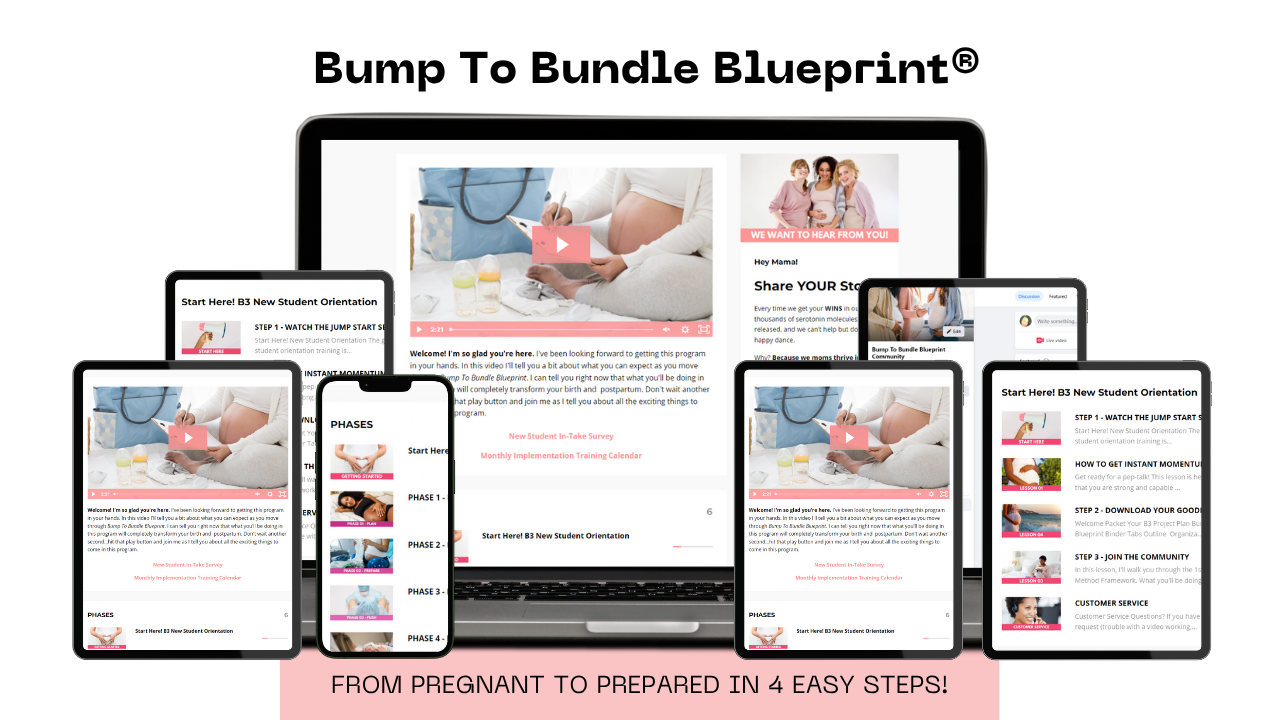
Bump To Bundle Blueprint®
If you think you need help preparing for your birth...you do! Prepare for your first birth faster than you can say:

