Real Labor vs. False Labor: How to Know If You’re Really in Labor
You feel it.
Your belly suddenly gets tight, you stop what you’re doing, and immediately your brain goes:
Wait…was that a contraction?
Then it happens again.
And now you’re looking at the clock, touching your belly and wondering the question almost every first-time mom asks toward the end of pregnancy:
“Is this actually labor, or is my body playing with me again?”
Mama, if you’ve been trying to figure out real labor vs. false labor, you are definitely not the only one.
One of the biggest misconceptions about labor is that you’ll automatically “just know” when it starts. Sometimes you will. But especially with your first baby, the beginning of labor can be surprisingly confusing.
Braxton Hicks contractions can feel convincing. Early labor can start slowly. Contractions may be mild at first. And your body can do a whole lot of warming up before the main event actually begins.
So instead of depending on one contraction to tell you what’s happening, I want you to learn how to...
How to Reduce Birth Anxiety: 3 Things First-Time Moms Can Do Before Labor Starts
Someone may have told you that the best way to prepare for birth is to stay positive, trust your body, and let nature take over.
That advice sounds comforting. It may even be partly true. Your body is doing something remarkable, and confidence matters. But “just trust your body” is not a complete birth-preparation plan.
It does not tell you what to do when contractions begin at 3:00 a.m. It does not tell you whom to call, when to leave for the hospital, what to grab, or how to calm yourself when your mind suddenly goes blank.
For many first-time moms, that blank space is exactly where birth anxiety grows.
You are not anxious because you are failing to think positively enough. You may be anxious because labor still feels unpredictable, unfamiliar, and full of unanswered questions.
The answer is not to memorize every possible labor scenario. The answer is to give your brain a few clear next steps.
A simple plan cannot control birth, but it can help you feel less lost inside it...
37 Weeks Pregnant: What to Expect, Symptoms, and How to Get Ready
You’ve officially made it to 37 weeks pregnant! First of all, congratulations, mama—you’re in the home stretch! But let’s be real… this week can feel both exciting and utterly exhausting. Everyone’s probably asking, “Is the baby here yet?” And while people love to say, “Baby could come any day now,” there’s actually a lot happening with your body and your baby that no one really talks about.
This guide will break down:
-
What’s happening with your baby at 37 weeks
-
Common and surprising pregnancy symptoms
-
How to tell real labor from false labor
-
Practical tips for the next few weeks
-
How to prep for birth and breastfeeding
By the end, you’ll feel more confident and prepared for this final stage of pregnancy.
Is 37 Weeks Considered Full Term?
At 37 weeks, you’re considered early term, not “full term” yet. Full term is actually 39–40 weeks.
Why does this matter? Babies born at 37 weeks often do well, but research shows they may be more likely to:
...
Hi! I'm Stephanie!
Stephanie Poole
Creator, Bump To Bundle Blueprint®
Most women struggle with preparing for birth. So, I created an academy that helps new moms prepare for their FIRST hospital birth. Birth Prep Academy helps Mamas (like you) transition into motherhood...Like A Boss!
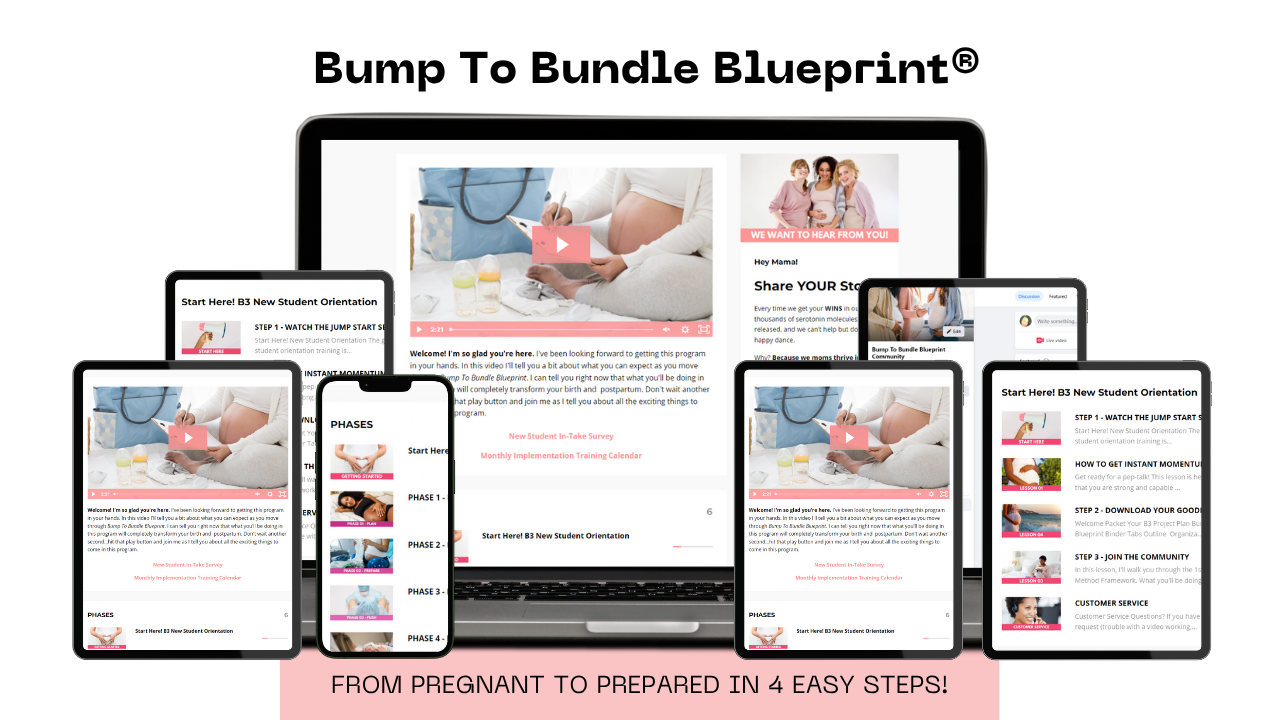
Bump To Bundle Blueprint®
If you think you need help preparing for your birth...you do! Prepare for your first birth faster than you can say:

